Rosneft Sponsors White Bear Children's Art Contest in Perm
 |
| photo of the Perm Zoo |
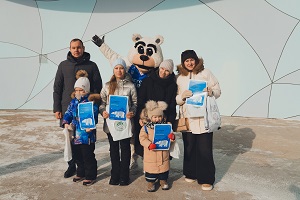
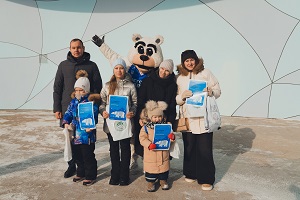
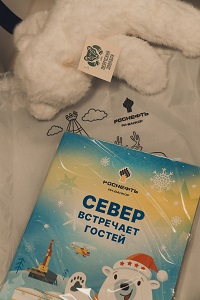
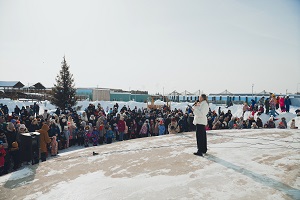
The winners of the White Bear children's art contest were honoured at Perm Zoo. Rosneft provided its support for the event. The objective of the contest is to raise awareness of the conservation of the world's largest land predator.
Over 2,000 young artists took part in the art contest, which was divided into three age categories: “My Friend – the Polar Bear” (ages 3–6), “The Polar Bear – an Endangered Species” (ages 7–12) and “The Bear in the World of Technology” (ages 13–17). The artworks were evaluated by a specially assembled expert jury.
 |
| photo of the Perm Zoo |
Preserving the polar bear population is an integral component of Rosneft's environmental programme. The polar bear is one of the main bioindicator species, the condition of which can be used to assess the state of Arctic ecosystems. Concurrently, the polar bear is accorded a special conservation status, as designated in the Red Book of the Russian Federation and the Red List of the International Union for Conservation of Nature.
Since 2013, Rosneft has been patronising all polar bears in Russian zoos. To date, the Company has provided support to 37 polar bears in 16 zoos across the country, including housing, feeding, veterinary care, and cage renovation. For instance, the Company sponsored the purchase of an ice-making machine for the Perm Zoo in 2025. The Perm Zoo, under the Company's care, is home to a family of polar bears: the female Milka, the male Seriku, and Parma, a female cub born last year.
 |
| photo of the Perm Zoo |
Since 2014, the Company has been also conducting expeditions to study polar bears in collaboration with leading scientists in our country. During this period, the Company organised 10 scientific expeditions. In 2024, Rosneft initiated a new four-year cycle of research into northern predator as part of Tamura, its corporate programme for preserving the biodiversity of Arctic ecosystems.
Rosneft is also implementing a comprehensive programme to support and protect polar bears living in the wild without maternal care. These efforts have resulted in the successful rescue of six orphaned bear cubs in the Russian Arctic.
For reference:
The following are some facts about the polar bear:
1. The polar bear is the largest terrestrial predator on the planet. Their weight averages 350 - 450 kg, body length is up to 2.5 m, but there are individuals who grow up to 3 m and fatten up to 800 kg.
2. Polar bear's fur is not white but transparent, a hair is hollow and filled with air what helps the animals to save heat better. The skin under the fur is black, and the bear's tongue is blue.
3. New-born cubs are about the size of a guinea pig. The cubs stay with their mother for about two years, during which time they learn the skills necessary to survive in the Arctic.
4. Polar bears are among the most voracious zoo inhabitants. Their daily food consumption typically reaches 15 kg on average.
5. In the wild, the lifespan of a polar bear is 20-30 years, and in zoos it is 30-35 years.
Department of Information and Advertising
Rosneft
March 26, 2026